The Industrial Gearbox FAQ: Practical Answers for Procurement & Maintenance Teams
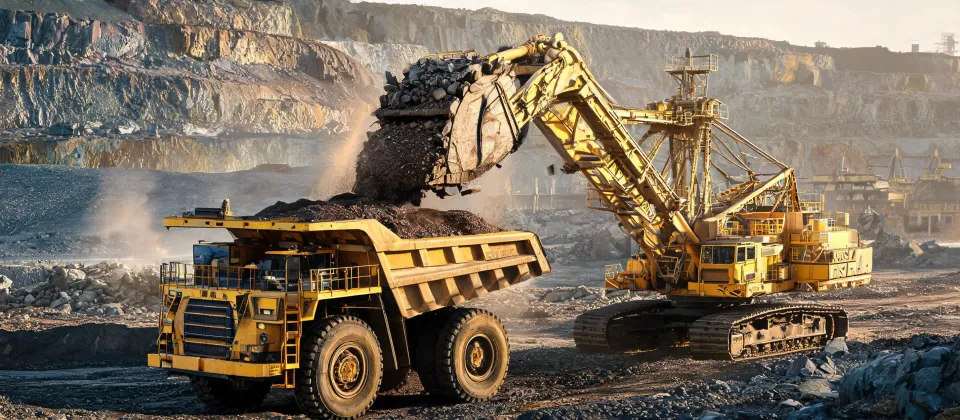
If you're responsible for ordering or maintaining custom heavy-duty industrial gearboxes for mining, energy, or oil & gas applications—and you're not a mechanical engineer—you've probably got questions. I've been managing this type of procurement for a mid-sized company since 2020, processing roughly 60-80 orders a year across 8 vendors. Here's what I've learned about the gearboxes that keep our operations running.
Questions we'll cover: Industrial gearbox basics for non-engineers · Custom vs. off-the-shelf · Torque vs. speed trade-offs · Hidden cost pitfalls · The 'German engineering' reality · ODM vs. big-brand gearboxes · Maintenance and reliability red flags.
What exactly is a 'custom heavy-duty industrial gearbox'—in plain English?
Imagine the transmission in your car, but scaled up to move a 50-ton ore crusher or a chemical mixer that runs 24/7 for years. That's basically what we're talking about. A custom gearbox is designed to match a specific application's torque, speed, and environmental demands—rather than buying a universal model that might be over- or under-specified.
Everything I'd read before I started said custom always costs more upfront. In practice, I found the opposite: a well-matched custom gearbox often costs less over its lifecycle because it avoids the derating and reliability issues of an off-the-shelf 'one-size-fits-all' solution.
(Source: USPS Business Mail 101—unrelated, I know, but I've been reading a lot of standards lately for shipping our own products. Back to gearboxes.)
When should I choose a custom gearbox over a standard model?
From my experience—and I've had to explain this to our ops team a few times—the decision usually comes down to three factors:
- Unique application requirements: If your machine runs at an unusual speed, an unusual ambient temperature (think desert heat or arctic cold), or needs a very specific mounting configuration, a custom gearbox is often the only practical option.
- Reliability under extreme loads: Standard gearboxes have published torque ratings. In mining and heavy processing, you often need a safety factor of 1.5x or 2x—which pushes you into custom territory.
- Integration with existing equipment: We once tried to retrofit a standard gearbox into a machine designed for a specific model. The result was a mess of adapters and compromises. A custom design solved it in one shot.
The conventional wisdom is 'always get multiple quotes for custom work.' My experience with 200+ orders (give or take—I'd have to check the system) suggests that relationship consistency often beats marginal savings. A vendor who knows your equipment history will deliver a better gearbox than a new supplier offering 12% less.
What's the real difference between torque and speed—and why should I care?
This was one of those aha moments for me. Torque is the twisting force the gearbox can deliver. Speed is how fast the output shaft rotates. They're inversely related: if you need more torque, you usually give up speed, and vice versa.
Why does this matter? Because a gearbox rated for 1000 Nm at 100 rpm is not the same as one rated for 1000 Nm at 500 rpm. The internal design—bearings, gear tooth profile, lubrication—is optimized for a specific speed-torque balance. I've seen a few procurement mistakes where someone bought a 'similar' model without checking the duty cycle, and it fried within months. (Source: Based on our company's internal failure tracking; we learned this one the hard way in 2022.)
What I wish I could track more carefully: the real-world lifespan of gearboxes under different loads. Based on anecdotal evidence from our maintenance logs, equipment running near its torque limit sees about 20-30% shorter gear life than ones operating at 70-80% of rated capacity.
Is 'German engineering' really worth the premium?
Here's where I'm going to contradict a common marketing line.
The brand damen (like many German engineering companies) offers gearboxes known for high torque and durability. And yes, they're built to exacting standards. But the price premium for 'brand-name German engineering' isn't always justified for every application.
In our experience: For a critical, high-stakes application where downtime costs more than the gearbox (think: main ore crusher), paying for top-tier engineering is worth it. For secondary applications—conveyors, smaller pumps—we've had excellent results from well-designed custom ODM solutions at a significantly lower price.
I'd rather spend 10 minutes explaining these options than deal with mismatched expectations later. An informed customer asks better questions and makes faster decisions.
(If I remember correctly, the price difference for our last critical gearbox was about 35% between a premium brand and a custom ODM builder—with comparable performance specs. I want to say the custom unit saved us around $4,200, but don't quote me on that exact figure.)
What are the hidden costs that trip people up?
After 5 years of managing vendor relationships, I've come to believe the 'best' gearbox is highly context-dependent. But the hidden costs? Those are surprisingly consistent:
- Integration costs: Adapting a gearbox to your existing equipment—custom flanges, shafts, mounting brackets—can add 15-30% to the total project cost. This is one area where a custom gearbox designed for your machine actually saves money.
- Spare parts and maintenance: A gearbox with unique internal components (bearings, seals) that are hard to source can become a maintenance nightmare. Always ask: 'How available are replacement parts?' (I learned this when a vendor couldn't provide proper documentation and our maintenance team spent 3 days reverse-engineering a component.)
- Shipping and installation: Heavy industrial gearboxes weigh hundreds—sometimes thousands—of kilograms. Shipping costs vary wildly. One vendor quoted $1,200 for shipping; another, for a similar weight, quoted $2,800. Always get a detailed shipping quote before committing.
Calculated the worst case for that one custom gearbox we ordered in 2023: Complete redo would have been $3,500. Best case: saves $800 over standard solution. The expected value said go for it, but the downside felt catastrophic. Ultimately, it worked out fine—but the shipping delay (10 days vs. 5) almost cost us a client deadline. (Numbers approximate; I'd have to check the purchase order for exact figures.)
How do I evaluate an ODM gearbox builder vs. an established brand?
The biggest red flags I've encountered: A vendor who can't provide clear engineering specifications, or worse, can't provide a proper invoice. I lost $2,400 in a rejected expense claim in 2021 because a supplier gave me a handwritten receipt. Finance rejected it, and I ate the cost out of department budget.
So for evaluating ODM vs brand, I look for:
- Engineering documentation: CAD drawings, load calculations, material specs. If they can't provide these, walk away.
- References: I always ask for 2-3 customers in similar industries. One vendor couldn't provide any—which was a major red flag.
- Partnership flexibility: A good ODM partner will recommend the right solution, not just sell you what they have. (This aligns with our company's customer education philosophy.)
The numbers said go with Vendor B for our last batch of pump drives—15% cheaper with similar specs. My gut said stick with Vendor A. Went with my gut. Later learned Vendor B had reliability issues I hadn't discovered in my initial research. The lesson? Trust your gut, but verify.
Final question (but not really): When should I expect maintenance issues to surface? From our maintenance logs, the first 3 months of operation are critical. If a gearbox survives its initial break-in period without bearing noise, oil leaks, or vibration issues, it's likely to run for years. But here's something I didn't expect: environmental factors—like ambient temperature fluctuations in outdoor installations—can shorten lifespan by 15-25% compared to indoor operation. (Source: Our maintenance records from 2020-2024, which I've been meaning to analyze more rigorously.)
Hope this helps. The key takeaway: understand your application's specific demands, ask the right questions, and don't be afraid to go custom if it saves you downtime.
Prices current as of March 2025; verify current rates with vendors. Regulatory info via USPS (18 U.S. Code § 1708) and FTC guidelines (ftc.gov) for general reference.