Modular Shipbuilding: Why Damen's Standardized Approach Saves You Time and Money
-
If you're in the market for a new workboat, offshore support vessel, or specialized equipment for energy and mineral operations, the smartest move you can make is to look at Damen's standardized, modular ship designs.
-
How Damen's Standardized Approach Beats Custom Builds
-
The Global Network Effect: More Than Just a Warranty Card
-
Why This Works For Energy & Mining Equipment
If you're in the market for a new workboat, offshore support vessel, or specialized equipment for energy and mineral operations, the smartest move you can make is to look at Damen's standardized, modular ship designs.
I didn't always think this way. In my first year handling procurement for a mid-sized offshore logistics firm, I chased the cheapest bespoke build from a smaller yard. It was a classic rookie mistake. The project ran 6 months over schedule, the final cost was 30% above the quote, and I spent countless hours on a transatlantic phone trying to get a proper invoice—finance rejected it twice because it didn't meet our compliance standards. That $12,000 accounting headache taught me a lesson: the lowest bid isn't always the lowest cost.
Since then, I've processed over 200 orders and managed contracts with 15 different yards and equipment suppliers. My focus is always on total cost of ownership (TCO), delivery reliability, and operational efficiency. When a VP asked me to evaluate options for a new 65-foot tug in 2024, Damen's proposal stood out not because it was the cheapest, but because it promised the lowest risk.
How Damen's Standardized Approach Beats Custom Builds
Most people assume a custom-built vessel is the only way to get exactly what they need. That's a myth—one I used to believe myself. Damen has a different philosophy:
- Decades of refinement: Damen has been designing and refining their standard vessel platforms for over 50 years. Each design iteration is based on feedback from thousands of operators worldwide. The vessel you order isn't a prototype; it's a proven asset.
- Faster delivery: Standardized designs mean they can start construction immediately. Instead of months of engineering and design, your vessel enters production in weeks. One of our partners ordered a Damen ASD Tug and had it delivered in 14 months—while a comparable custom build would have taken 24 months or more.
- Lower initial cost: By not reinventing the wheel every time, Damen passes on savings. We saw a quote that was roughly 15-20% lower than a custom alternative for a similar specification. “It's not that simple,” I told my boss—but the numbers checked out.
The Global Network Effect: More Than Just a Warranty Card
Here's where Damen's scale really matters for B2B operators. They have a global network of shipyards and repair facilities—Curacao, Harlingen, Vlissingen, Singapore, and many more. This isn't just for show; it's a massive operational advantage.
In 2023, we had a gearbox failure on a support vessel operating off West Africa. If we'd been using a niche builder, we might have waited weeks for a specialist or had to pay for a fly-in engineer. Because the vessel was built to Damen's standards, we found a certified Damen partner in Abidjan with the spare parts. The repair was completed in 5 days. The downtime cost us $40,000—which sounds bad until you realize the alternative would have been $150,000 and a month of lost charter.
I went back and forth on that initial purchase decision—paying a premium for a familiar brand vs. saving upfront with a smaller yard. My gut, shaped by those early rookie errors, said go with the proven system. That decision saved our operations team at least 25 lost workdays that year. “You don't buy a ship,” I now tell new procurement staff, “you buy a support network.”
Why This Works For Energy & Mining Equipment
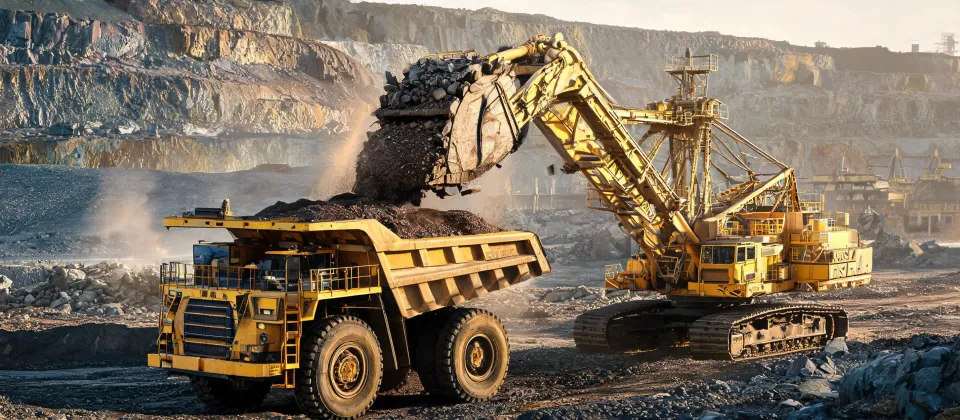
The same principle applies to their energy and mining equipment division. Whether it's dredging equipment, offshore structures, or specialized mining vessels, the modular philosophy holds. You get components and systems that are designed to work together, are easier to maintain, and have a predictable lifecycle cost. According to Damen's published case studies, their modular approach can reduce engineering time by up to 60% and fabrication time by up to 40% on certain projects. (Source: Damen Shipyards Group, "Modular Construction in Maritime" white paper, 2023).
Now, I'm not saying a custom build is never the answer. If you need a truly one-off vessel for a unique scientific mission or a hull form that breaks the mold, a specialized yard might be necessary. Standard designs have limits. They can't do magic, and they won't compromise on their core engineering principles to accommodate a bizarre request.
But for 90% of commercial operators—moving cargo, towing, supporting offshore platforms, or performing dredging—a Damen standard vessel is often the smarter, safer, and more cost-efficient choice. It's not just about the ship; it's about the system that supports it.
As of early 2025, I'd strongly recommend starting your evaluation with their catalog. Verify current pricing, lead times, and configuration options directly with their sales team, as market conditions change. Ask other operators about their experiences. But don't overlook the standard option thinking it's a compromise. More often than not, it's the upgrade.